Presence is not control. Ireland has settled where Designated Persons sit. The next question is who they answer to, and Boards should start working through it now.
In August I argued that visibility is not ownership: a Board can see everything its compliance and internal audit functions do and still own none of it. My piece the same month on the Central Bank’s July delegation review asked the same question another way: can a fund management company form, evidence and stand over its own judgement, or is it, in substance, relying on someone else to do so?
Last December I picked the effectiveness of the second and third lines, operational resilience and value for money as Central Bank priorities for 2026; all three have since landed. The next instalment is already under way. The Central Bank is reviewing fund management company governance this year, a review it says may simplify CP86, reinforce the PCF framework and consider how the Individual Accountability Framework and SEAR might apply proportionately to funds. Nobody outside the Central Bank knows where that lands. But the public record points in some clear directions, and Boards would be wise to think them through before the consultation paper arrives rather than after.
Where the rules now stand
The new Central Bank UCITS Regulations, made in July, keep the location rules and apply them as a floor to every management company: at least two directors resident in the State, half the directors resident in the EEA, and half the managerial functions performed by at least two Designated Persons resident in the EEA. The organisational effectiveness role is now in the Regulations too, to be performed by an independent chair or an independent board member.
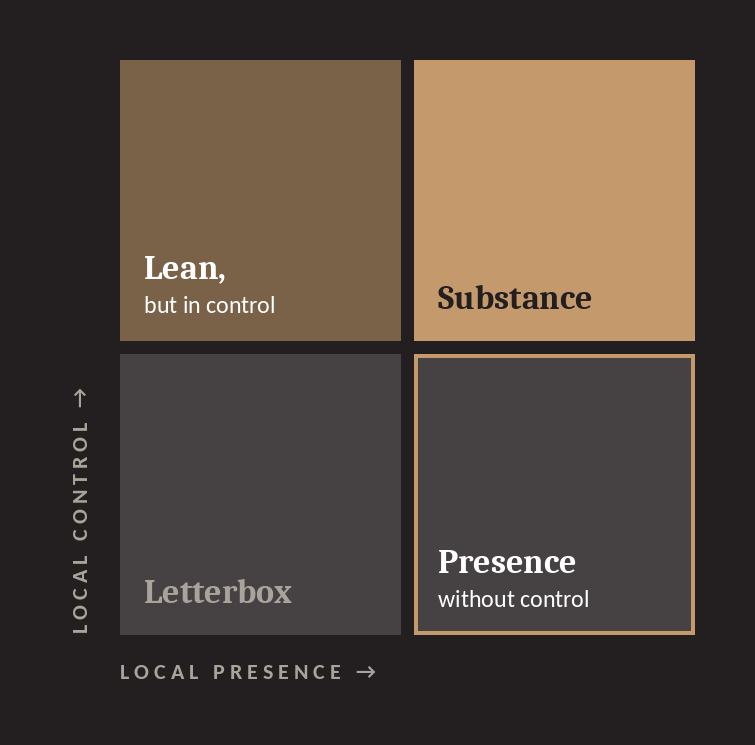
That settles where people sit. It does not settle who they answer to.
The gap the Central Bank has already described
The delegation review was candid: group influence crowding out independent challenge, Designated Persons not senior enough or carrying too many roles, firms leaning on group due diligence instead of forming their own view. In August the Central Bank made a similar point to payment and e-money firms about ICT, criticising thin local substance where the group both runs the service and checks its own work.
The pattern behind those findings is familiar. A Designated Person in Dublin, or elsewhere in the EEA, holds the PCF. Their real reporting line runs to a global head of function outside the EEA, who sets their objectives and pay and can, in practice, override them, without sitting on the Irish Board or holding a PCF. The person who decides is not accountable to the Central Bank, and the person accountable does not decide.
Three ways the rewrite could go
1. Simplify and clarify. The lightest outcome: a shorter, less prescriptive CP86, a reinforced PCF framework and clearer expectations that Designated Persons are senior enough to carry their roles. The signals are the review’s own stated scope and the delegation finding on seniority. For Boards, the question becomes whether each Designated Person’s grade within the wider group matches the authority the role requires.
2. Map and test. A middle path: SEAR-style responsibilities maps for funds, showing actual lines of control including those that run outside Ireland; evidence-based tests of independence (who sets pay and objectives, who can remove a Designated Person, whether they have direct access to the Chair); and perhaps a requirement to notify the Central Bank, with reasons, when a Designated Person leaves. The signals are the stated intention to consider IAF and SEAR for funds, and the CSA’s insistence that Boards demonstrate ownership rather than visibility. The organisational effectiveness role, now on a statutory footing, is a natural home for testing whether the Board challenges or ratifies.
3. Reach the controllers. The firmest outcome, and the one groups will least welcome. The fitness and probity regime already reaches those who exercise significant influence over a regulated firm’s affairs, wherever they are based. Guidance could make plain that whoever sets a Designated Person’s objectives or pay, or can override their decisions, is likely to be performing a controlled function. The signals are the group-influence findings in the delegation review and the same theme surfacing in other sectors. The line any such guidance would need to draw is between control and ordinary group expertise and support, which is valuable and should be left alone.
These are not mutually exclusive, and the likeliest landing may be a blend: lighter rules where substance is evident, and more scrutiny where control sits offshore. If so, groups with genuinely senior or Dublin-based functions would feel it least. For most others, the cheapest response would be to re-route a reporting line or appoint a more senior Designated Person, rather than put an overseas executive through a fitness and probity process.
Two cautions for anyone tempted to dismiss the firmer outcomes. On the published requirements, Luxembourg’s approach also turns on presence rather than on who directs the people on the ground, so a move there is less of an escape than it looks, and ESMA’s direction of travel on substance and delegation runs the same way. And with value for money now the subject of ESMA-coordinated reviews by the Central Bank, a Board that has never compared its funds with the group’s equivalents elsewhere is telling a supervisor where its decisions are really taken.
No-regret moves for Boards
Whichever way the rewrite goes, the preparation is the same, and most of it belongs in this year’s delegation gap analysis anyway:
- Map the real lines of control for each Designated Person, including those that run outside Ireland.
- Test seniority against the group’s own grading, not the local org chart.
- Agree how a Designated Person’s departure would be handled, including what the Board would tell the Central Bank and why.
- Ask the organisational effectiveness director to report on whether the Board challenges decisions or ratifies them.
- Put three questions to the Board: who sets our Designated Persons’ objectives and pay? Who could remove them? When did a Designated Person last say no to the group, and what happened next?
If the answers point offshore, a supervisor will reach the same conclusion. Better that the Board reaches it first.
The question underneath
Whichever scenario arrives, the question underneath is the same: who does your Designated Person actually answer to? Ireland has settled where Designated Persons sit. The rewrite is likely to turn to who they report to, and the Boards that have already answered it will find the consultation paper a lot less interesting.
If you would like an independent view of where your arrangements stand against all three scenarios, we run a short readiness review that maps the real lines of control, tests Designated Person seniority and independence, and gives the Board a clear red, amber, green position and an action plan within a few weeks. It sits naturally alongside the delegation gap analysis due by year end, so two pieces of work become one. Get in touch at paul.traynor@vpp.ie.
Paul Traynor is Managing Partner of Vantage Point Partners, which runs independent governance and delegation reviews for Irish fund management companies. He is a Chartered Accountant and CBI-approved PCF, and has led several Central Bank commissioned reviews of regulated firms.
Vantage Point Partners – Protect. Optimise. Grow.